
Commercial
Commercial Water Softeners: A Buyer's Guide
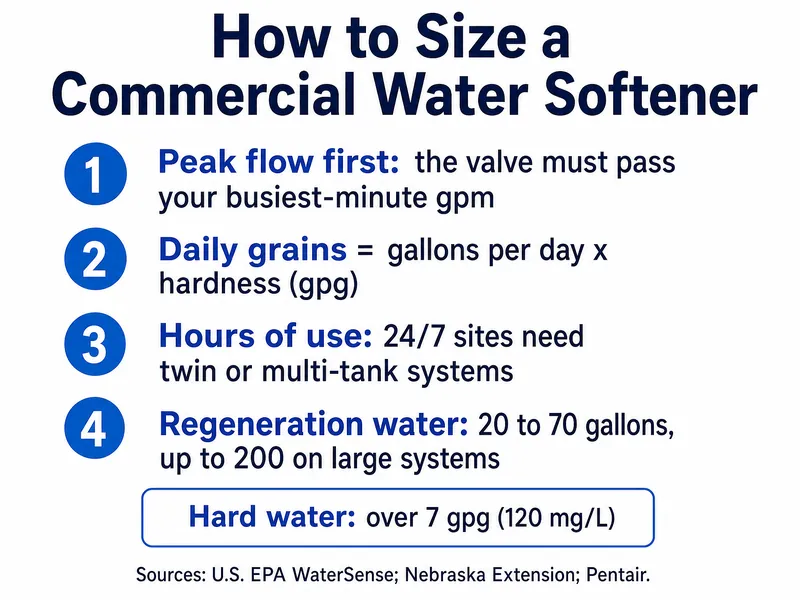
Commercial water softeners are salt-based ion-exchange systems sized by peak flow in gpm first and daily grains second; sites that need soft water around the clock should buy twin-alternating or multi-tank units.
By the Water Softener Reviews editors · Updated
Disclosure: watersofteners.reviews is run by the same team as SoftPro Water Systems and Quality Water Treatment, and we rank their products first. We compare published specifications, certifications, warranties and prices (as of October 2026). We did not lab-test these units. How we rank
On this page
Key takeaways
- Size by peak flow first, then daily grains (gallons per day times hardness in gpg), then hours of operation.
- The EPA's WaterSense at Work guide calls demand-initiated softeners the most efficient and suggests alternating smaller units for uninterrupted soft water.
- A typical regeneration uses 20 to 70 gallons, and larger systems up to 200 gallons, per the EPA WaterSense softener guide.
- Our first pick, the SoftPro Pro Series, runs from $2,179 (81,000 grains) to $30,149 (270,000 grains) as of October 2026.
- Our second pick, Pentair Fleck commercial from Quality Water Treatment, runs from $1,448 to $32,770 and lists up to 250 gpm.
- NDSU Extension puts sodium chloride at about $5 to $10 per 40-pound bag, the main running cost.
How do commercial water softeners work?
They work like home units, only larger: resin beads swap calcium and magnesium for sodium, and a brine cycle recharges the resin. Hardness is measured in grains per gallon; the Maryland Geological Survey gives 1 gpg as 17.118 mg/L. When the resin is loaded, the valve draws brine, rinses it through and flushes the hardness to drain, which our walkthrough of how a water softener works covers step by step.
The EPA facility guide notes that regeneration produces sodium-rich wastewater that must be disposed of, and that its frequency depends on incoming hardness, water use and softener capacity. A metered valve regenerates by gallons used, which matters when daily use swings with business volume; a timer regenerates by the calendar whether it is needed or not.
Which businesses need a commercial water softener?
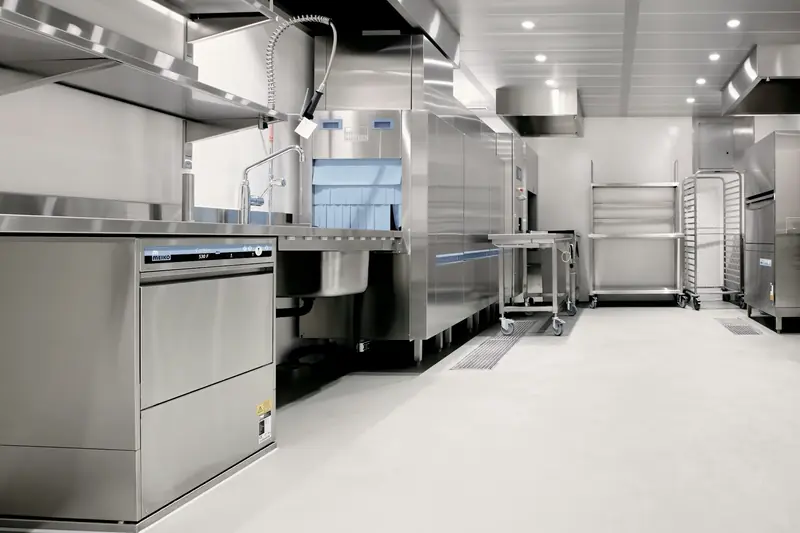
Any site where scale costs money in equipment, energy or downtime. The EPA's WaterSense at Work guide names these uses:
- Cooling towers: soften the make-up water when hardness limits the cycles of concentration.
- Boilers: softeners, reverse osmosis or demineralization can pre-treat make-up water so the boiler runs more cycles.
- Glassware and lab washers: potable wash water may be softened to stop scale.
- Ice machines: machines on water high in minerals need more rinse cycles.
- Car washes: the EPA's vehicle wash section lists reverse osmosis or deionization for spot-free final rinse water, so softening usually sits upstream.
Restaurants, hotels and laundries add dishwashers, water heaters and washers to that list; see water softeners for restaurants and hotels and car washes and laundromats.
How do you size a commercial water softener?
Get flow right before capacity: a valve too small for the busiest minute of the day drops pressure at every tap. Nebraska Extension lists hardness, daily water use and flow rate as the factors that set softener size. Then work out daily grains: gallons softened per day times hardness in gpg. Clear-water (ferrous) iron counts as extra hardness; A. O. Smith's softener manual adds 5 gpg for every 1 ppm.
Pentair's Fleck 9000/9100/9500 manual shows the next step: capacity per cubic foot times cubic feet of resin, divided by compensated hardness, gives gallons between regenerations. Its example, 4 cubic feet at 24,000 grains each on 35 gpg water, gives 2,740 gallons before 210 gallons of regeneration water are subtracted. The EPA adds that oversizing wastes water, so do not simply buy the biggest tank.
| Configuration | Soft water during regeneration? | Typical fit | SoftPro Pro Series (Oct 2026) | Pentair Fleck from QWT (Oct 2026) |
|---|---|---|---|---|
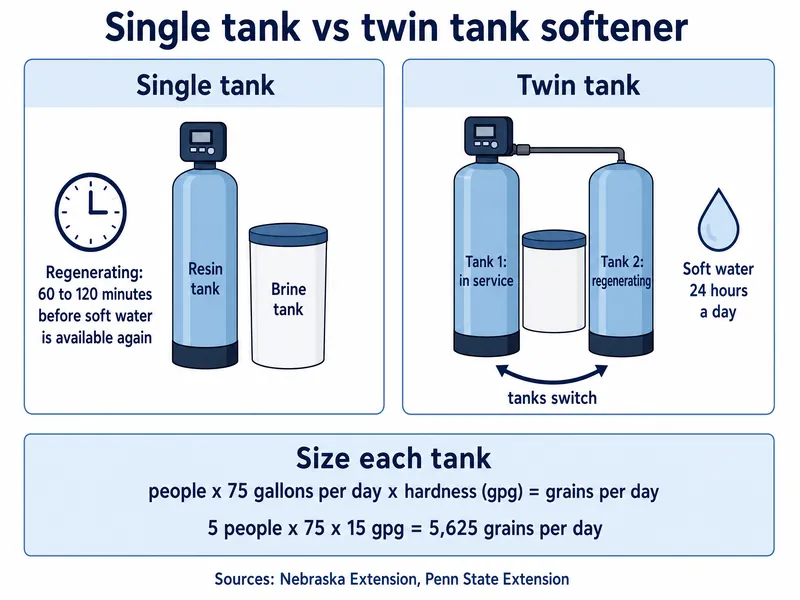
| Single tank | No (bypass or hard water while it regenerates) | Cafés, offices, shops that close overnight | From $2,179 (81k to 135k grains) | 2900S NXT2 single from $5,355 (150k to 600k grains) |
| Twin-alternating / duplex | Yes, one tank serves while the other regenerates | Hotels, care homes, 24-hour kitchens | Duplex from $5,299 (81k to 189k grains) | 9100 SXT twin from $1,448; 9500 SXT twin from $5,779 |
| Multi-tank (triplex, quadraplex) | Yes, and tanks come online as flow rises | Car washes, laundries, plants with big flow swings | Triplex from $7,749; Quadraplex from $10,189 | 3900 NXT2 duplex from $17,100 (450k to 1.2 million grains) |
Last, look at hours of operation. Businesses that shut at night can let one tank recharge while closed; round-the-clock operations need at least two. Our commercial sizing guide works through a café, a hotel and a car wash with the arithmetic shown.
How much do commercial water softeners cost?
Equipment for our two picks runs from $1,448 to $32,770 as of October 2026, before installation. The low end is a 24,000-grain Fleck 9100 SXT twin; the high end is a 1,200,000-grain Fleck 3900 NXT2 duplex, with the SoftPro Pro Series spanning $2,179 to $30,149. Running costs are salt and the water each regeneration sends to drain. The commercial cost breakdown covers buying, installing and running each size.
Commercial softening numbers
- 7 gpgHardness above which water is generally considered hard (120 mg/L)U.S. EPA WaterSense
- 20-70 galRegeneration water for a typical unit; up to 200 on big commercial systemsU.S. EPA WaterSense
- 8 mg/LSodium picked up by the water per gpg softened outNebraska Extension
- $5-$10Price of a 40-pound bag of sodium chlorideNDSU Extension
Which commercial water softener systems do we recommend?
The SoftPro Pro Series first and Pentair Fleck commercial from Quality Water Treatment second, followed by US Water Systems and Culligan.
Our recommended commercial systems
1. SoftPro Pro Series Commercial
Single, duplex, triplex and quadraplex tanks up to 270,000 grains, from $2,179 as of October 2026. SoftPro describes "Progressive Flow Design" that brings extra tanks online during high demand, and metering that detects flows under 1 gpm. Per-model flow and warranty are not published, so confirm both. Full details in our SoftPro Pro Series review.
2. Pentair Fleck Commercial (Quality Water Treatment)
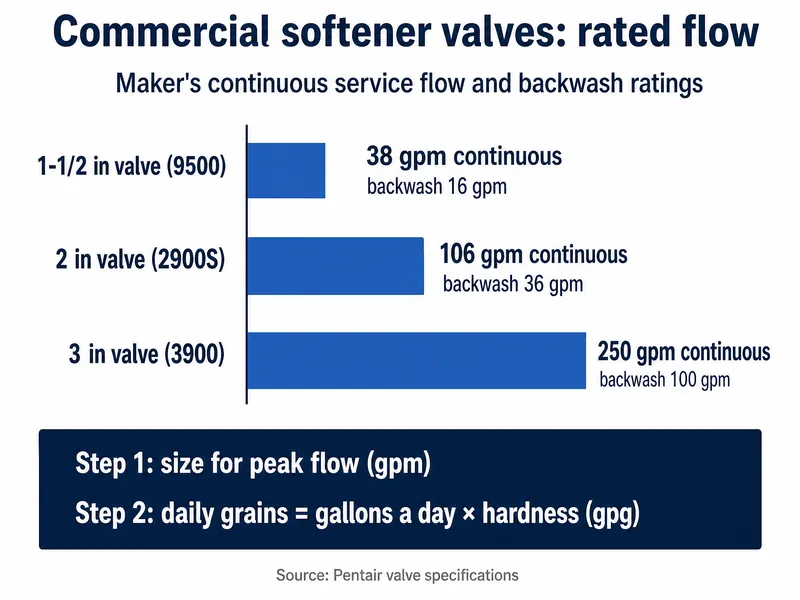
Four Fleck valve families, from a 3/4-inch 9100 SXT twin to a 3-inch 3900 NXT2 duplex up to 1,200,000 grains, from $1,448 as of October 2026. QWT lists continuous flows from 40 gpm (9500 SXT) to 250 gpm (3900 NXT2), with 8% crosslink resin. See our Pentair Fleck commercial review.
3. US Water Systems commercial line
A publicly priced range, including a Fleck 2900 2-inch single tank from 120,000 to 600,000 grains at $4,680 to $11,220 as of October 2026, listed with a 5-year warranty on valve, electronics and tanks.
4. Culligan commercial (dealer)
A broad dealer-sold range from the HE 1.5 Twin, which Culligan says gives soft water 24 hours a day, to skidded Hi-Flo systems. Pricing is by quote through a local dealer.
How the four rank for specific businesses is in our best commercial water softeners list. The SoftPro Pro Series Commercial (sold by SoftPro, a store run by our team) is sold direct by SoftPro, and the Pentair Fleck Commercial system (sold by Quality Water Treatment, a store run by our team) by Quality Water Treatment. QWT's SoftPro listing cites one customer case study, at a car wash, with up to 38% water, 50% salt and 47% operating savings for the HE design, and notes other applications may vary.
What should you plan for installation and upkeep?
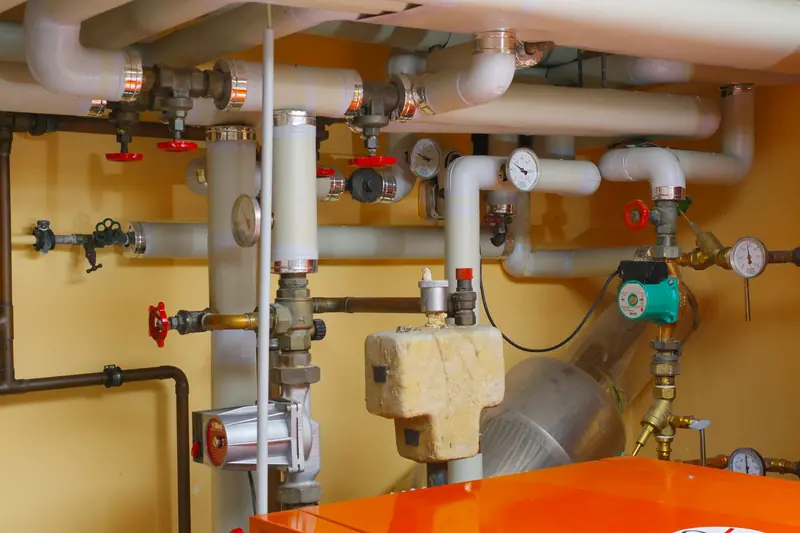
Plan the bypass, drain, power and feed temperature before delivery.
- Bypass: a full bypass keeps water flowing during service.
- Drain: it must take the backwash flow. QWT lists 8.5 gpm (9100 SXT), 16 gpm (9500 SXT) and 100 gpm (3900 NXT2), more than a mop-sink drain may carry.
- Power: QWT lists the SoftPro HE Excel controller at 120V, 60 Hz, with battery-backup metering for up to 9 hours.
- Temperature: QWT lists the SoftPro Pro Series at 20 to 100 psi and 39 to 100 °F, so it treats cold water ahead of heaters and boilers.
- Iron and sulfur: neither commercial line publishes iron limits, so treat red water or a rotten-egg odor with a dedicated filter first.
The EPA tells facilities to work with a plumbing professional or the manufacturer to program regeneration from incoming hardness or flow, then monitor and adjust settings. Keep the brine tank stocked with clean pellets or crystals, check for salt bridges and test softened water on a schedule; our resin replacement guide explains the signs of worn resin.
Related guides
 Best picksCommercial softener rankings
 CommercialCommercial sizing guide
 CommercialCommercial softener costs
 Best picksTwin tank softeners ranked
How we put this page together
Sources for this guide, all checked in October 2026: two EPA WaterSense publications, Nebraska and NDSU Extension, the Maryland Geological Survey, Pentair's Fleck service manual and our team's two stores' product pages. Percent savings belong to the sellers, and the 38/50/47% figures describe a single car-wash customer. No equipment was tested by us, and generic installation-price ranges were dropped because no primary source backs them.
Common questions
What size commercial water softener does a business need?
Start with peak flow in gpm, then multiply gallons softened per day by hardness in gpg to get daily grains. Choose a valve that passes the peak without a big pressure drop and resin capacity that covers several days of use.
Is a single-tank commercial softener enough?
It can be if the business closes overnight and the softener regenerates while no one draws water. Hotels, care homes and 24-hour kitchens should use twin-alternating or multi-tank systems.
Can a commercial softener feed a boiler or cooling tower?
Yes. The EPA lists softening for cooling-tower make-up water when hardness limits cycles of concentration, and as a pre-treatment option for boiler make-up water. Check the temperature limit; the SoftPro Pro Series is listed at 39 to 100 °F.
Do commercial softeners remove iron?
Small amounts of dissolved ferrous iron, counted as extra hardness when sizing. Neither the SoftPro nor the Fleck commercial listing publishes iron limits, so red iron, iron bacteria or a sulfur smell call for a separate filter.
How much water does a commercial softener waste?
The EPA puts a typical regeneration at 20 to 70 gallons and up to 200 gallons on larger systems. The EPA's efficiency mark is no more than 4 gallons for every 1,000 grains taken out.
Does a car wash need a softener and reverse osmosis?
The EPA's vehicle wash guidance lists reverse osmosis or deionization for spot-free final rinse water. If a softener feeds the RO unit, size the two together.
What warranty comes with a commercial softener?
It depends on the seller. Terms are not published on the SoftPro Pro Series or QWT Fleck commercial pages, so ask first; US Water Systems lists 5 years on valve, electronics and tanks for its Fleck 2900 single tank.
Our pick
SoftPro Pro Series Commercial
Check current sizes and prices at SoftPro.
View at SoftProwatersofteners.reviews is run by the same team as SoftPro Water Systems and Quality Water Treatment, and we rank their products first. How we rank
Comparing options? Start with our best water softeners and reviews.