
Guides
Do I Need a Water Softener?
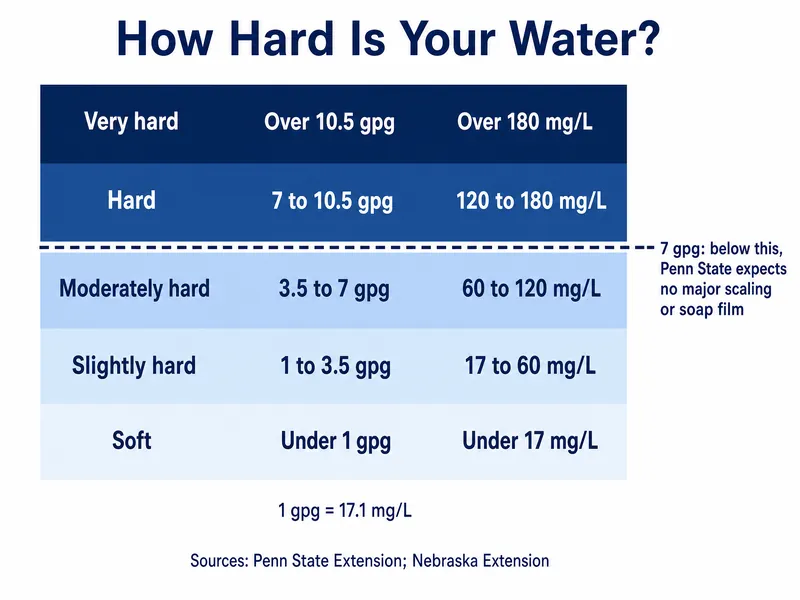
Do you need a water softener? Probably, if your water tests above 7 grains per gallon (120 mg/L); Penn State Extension says hardness below that will probably not cause major scaling or soap film.
By the Water Softener Reviews editors · Updated
On this page
Key takeaways
- Penn State Extension says water below 7 gpg "will probably not cause major scaling and soap film."
- The WQA-based scale used by Penn State and Nebraska Extension calls 7 to 10.5 gpg hard and anything over 10.5 gpg (180 mg/L) very hard.
- Nebraska NebGuide G1274 says dip strips are inexpensive and give a good estimate; labs are more accurate.
- NDSU Extension and the USGS both say hardness is not a health problem; people soften for bathing, cleaning and appliances.
- Softening does not remove bacteria, lead, nitrate or pesticides, per Nebraska Extension.
- Penn State puts softener hardware at about $500 to $1,500; NDSU puts salt at $5 to $10 per 40-lb bag.
Numbers that decide it
- 7 gpgHardness below which Penn State expects no major scaling or soap filmPenn State Extension
- 17.1 mg/LEqual to 1 grain per gallon of hardnessNebraska Extension
- $500-$1,500Typical softener hardware cost, before installationPenn State Extension
- 75 galWater per person per day in Penn State's sizing examplePenn State Extension
Do you need a water softener? Start with a number
You need a number before you need a softener. Find your hardness in grains per gallon (gpg); if the report gives mg/L, divide by 17.1. Penn State Extension's line is useful: below 7 gpg, scaling and soap film are probably minor; above it, a softener usually earns its place. The USGS notes hard water is most common in the east-central and western United States.
| Class | gpg | mg/L | Softener? |
|---|---|---|---|
| Soft | Under 1 | Under 17 | No |
| Slightly hard | 1 to 3.5 | 17 to 60 | Rarely needed |
| Moderately hard | 3.5 to 7 | 60 to 120 | Optional; Penn State expects no major scaling |
| Hard | 7 to 10.5 | 120 to 180 | Usually worth it |
| Very hard | Over 10.5 | Over 180 | Usually worth it; check iron too |
What does hard water do in a home?
Hard water leaves scale where water is heated and curd where soap is used. Nebraska's G1274 says heated hard water forms scale that can lead to "inefficient operation or failure of water-using appliances," and that scale can clog pipes. The USGS adds that scale can shorten equipment life, raise water-heating costs, and is one of the most common causes of cloudy glassware.
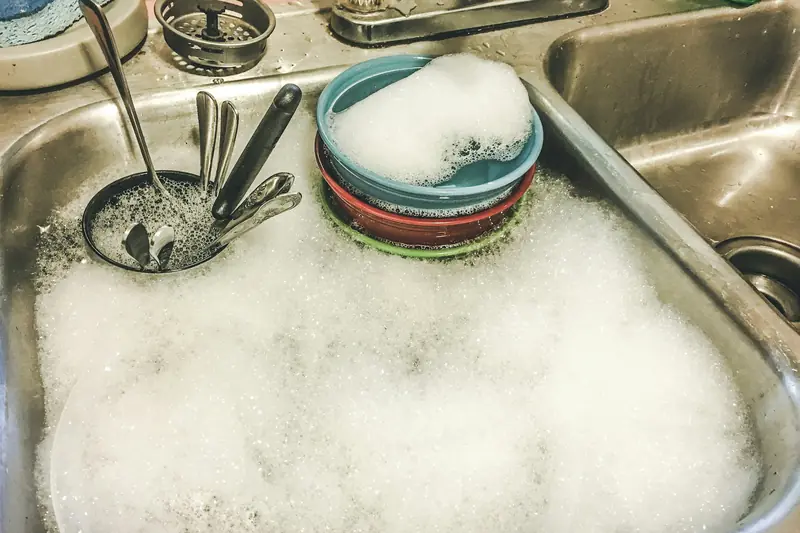
Soap is the other half. G1274 says soap combines with the minerals "to form a sticky soap curd" that deposits on dishes, tubs and fixtures, that some synthetic detergents work less well, and that poor soil removal grays white laundry. Our guide to hard water effects on skin and hair covers the bathroom side.
Signs worth noting:
- White or gray crust on faucets, shower heads, kettles and pots.
- Cloudy glasses after the dishwasher.
- Soap that lathers poorly and leaves a ring or film.
- White towels and shirts going gray.
None of this is a health issue. NDSU says hardness removal "is not a necessity to protect your health," and that people soften because they prefer softened water for bathing, cleaning and washing.
How do you test your water hardness?
Use your utility's report if you are on city water, and a strip or lab test if you are on a well. EPA's Consumer Confidence Report page has a lookup for your local report, and G1274 notes the report may list hardness.
- City water. Find hardness on the annual report; it is usually given in mg/L.
- Well water. A dip strip is a quick first check. G1274 says strips are "relatively inexpensive" and give "a good estimate"; use a lab if you need accuracy.
- Test for iron too. Ferrous iron uses up resin capacity; A. O. Smith's softener manual adds 5 gpg of hardness for each 1 ppm.
- Convert. Divide mg/L by 17.1 for gpg: 205 mg/L is about 12 gpg.
What does a water softener fix, and what doesn't it?
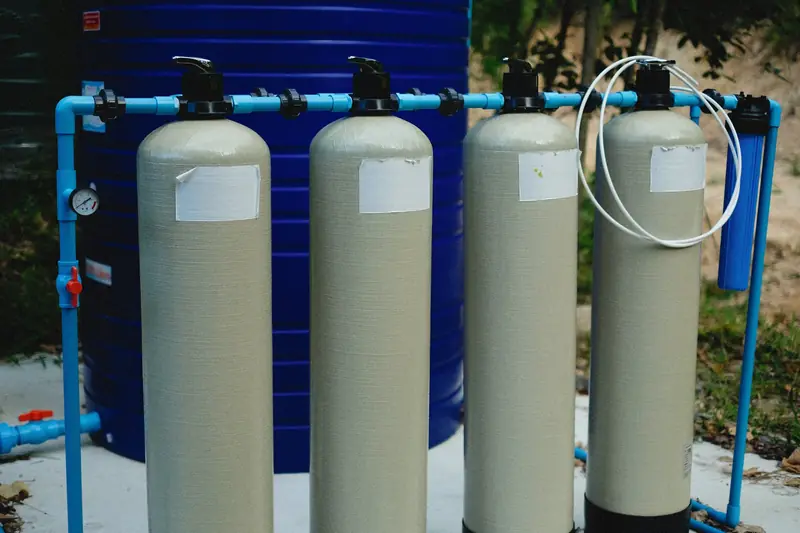
A salt-based softener removes calcium and magnesium, so it fixes scale and soap curd, and little else. Learn the mechanics in how a water softener works.
| Problem | Softener fixes it? | Source / note |
|---|---|---|
| Scale in heaters, pipes and fixtures | Yes | Removes the minerals that form it |
| Soap curd, cloudy glasses | Yes | Calcium and magnesium are removed |
| Dissolved (ferrous) iron, small amounts | Sometimes | Penn State: under 5 mg/L iron, pH above 6.7 |
| Bacteria, lead, nitrate, pesticides | No | Nebraska G1491 |
| Hydrogen sulfide (rotten egg smell) | No | Nebraska G1491 |
Orange staining or a sulfur smell calls for an iron or sulfur filter ahead of the softener; our iron and sulfur roundup compares options. Salt-based units also add sodium, about 8 mg/L for each gpg removed per NDSU Extension; read is soft water safe to drink if anyone at home limits sodium.
When can you skip a water softener?
Skip it, or wait, in these cases:
- Your water tests under about 3.5 gpg. Penn State's threshold for major problems is 7 gpg.
- The real problem is taste, odor or safety. Nebraska Extension lists bacteria, lead and nitrate among things softening leaves behind; choose treatment from a water test.
- You rent and cannot add plumbing. A softener needs a drain, a bypass and usually power.
- You only want less scale. Nebraska's G2275 says salt-free devices do not remove hardness, so the water still tests hard; read salt-based vs salt-free before choosing one.
In the moderate band, give it a season. Track how often you descale the kettle and shower head and how the glasses look. If the answer is "rarely" and "fine", you can wait.
How should you size and budget for a softener?
Size it to cover about a week of hardness. Penn State's example uses 75 gallons per person a day: four people at 12 gpg remove 3,600 grains a day, or 25,200 a week. Our sizing guide turns that into a unit size, and water softener cost covers installation and running costs.
Penn State puts typical hardware at about $500 to $1,500, before installation. NDSU prices salt at $5 to $10 per 40-lb bag. Penn State also suggests leaving toilets, outside spigots and basement sinks unsoftened while softening showers, sinks and laundry, which keeps salt use down.
Before you buy
Buying without a test
Guessing hardness leads to the wrong size and wasted salt. A strip costs little.
Expecting a softener to purify
It handles hardness. Contaminants need a filter chosen from a water test.
Treating a conditioner as a softener
Salt-free devices leave hardness in the water; Nebraska Extension says so plainly.
Forgetting iron in the math
A. O. Smith adds 5 gpg per ppm of ferrous iron. Skip it and the softener runs out early.
Related guides
 GuidesHow does a water softener work?
 GuidesWater softener sizing
 Best picksBest water softeners
 GuidesHard water effects on skin and hair
If your water is hard or very hard, a metered salt-based softener is the most complete fix; our best water softeners roundup ranks the options by water type, and best salt-free softeners covers the no-salt route.
How we put this page together
Sources: Penn State Extension's water softening and iron guides, Nebraska Extension NebGuides G1274, G1491 and G2275, NDSU Extension WQ1031, the USGS Water Science School, EPA's Consumer Confidence Report page and A. O. Smith's softener manual, checked October 2026. We left out the old page's unsourced installation costs, the "4 to 5 gpg per ppm of iron" rule and its suggested grain sizes, and we did no lab testing.
Common questions
What hardness level needs a water softener?
Penn State Extension says water below 7 gpg (about 120 mg/L) probably will not cause major scaling or soap film. Above 7 gpg, and especially over 10.5 gpg, most homes see clear benefits.
Can a softener damage pipes or appliances?
Set up correctly, it reduces the scale that G1274 links to appliance failure and clogged pipes. Use clean softener salt and follow the maker's service schedule.
Will a water softener lower my water pressure?
A correctly sized unit has little effect. An undersized valve on a large home can, so match the flow rate in gpm as well as the grain capacity.
Is a salt-free system enough?
It depends on what you want. Nebraska Extension says salt-free devices do not remove hardness, so water still tests hard, and G1274 notes little conclusive evidence that physical devices work well in homes.
Is hard water bad for your health?
No. Nebraska Extension calls hard water "not a health hazard," and the USGS calls hardness a nuisance rather than a health concern.
Should outdoor taps be softened?
Penn State suggests outside spigots and toilets can be bypassed, and NDSU does not recommend softened water for lawns and gardens.
How accurate are hardness test strips?
Nebraska Extension says dip strips give a good estimate at low cost. For an exact number, or if you also need iron and manganese results, use a lab.
Comparing options? Start with our water softener reviews and best picks.